Abdominoplasty
What does the procedure involve?
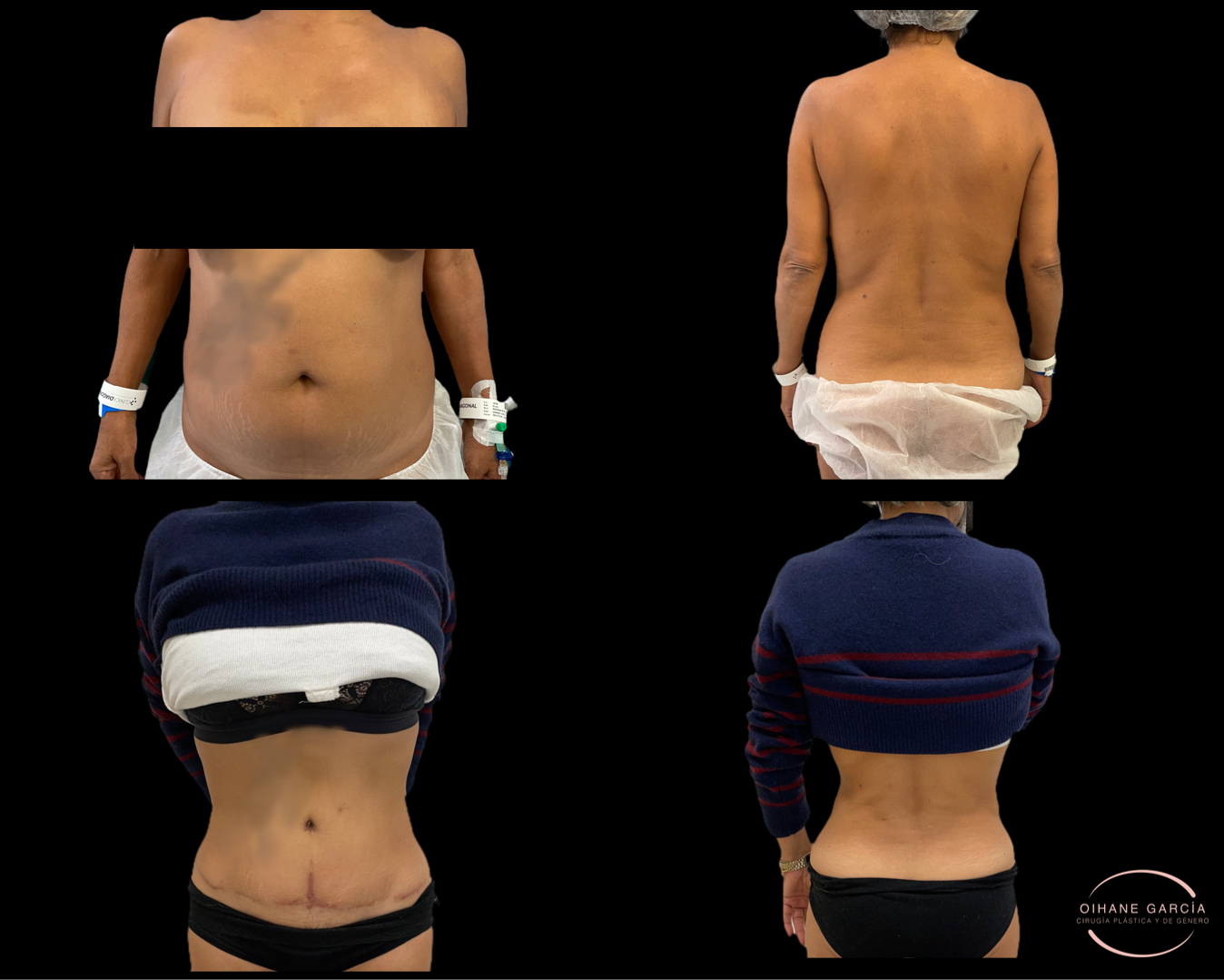
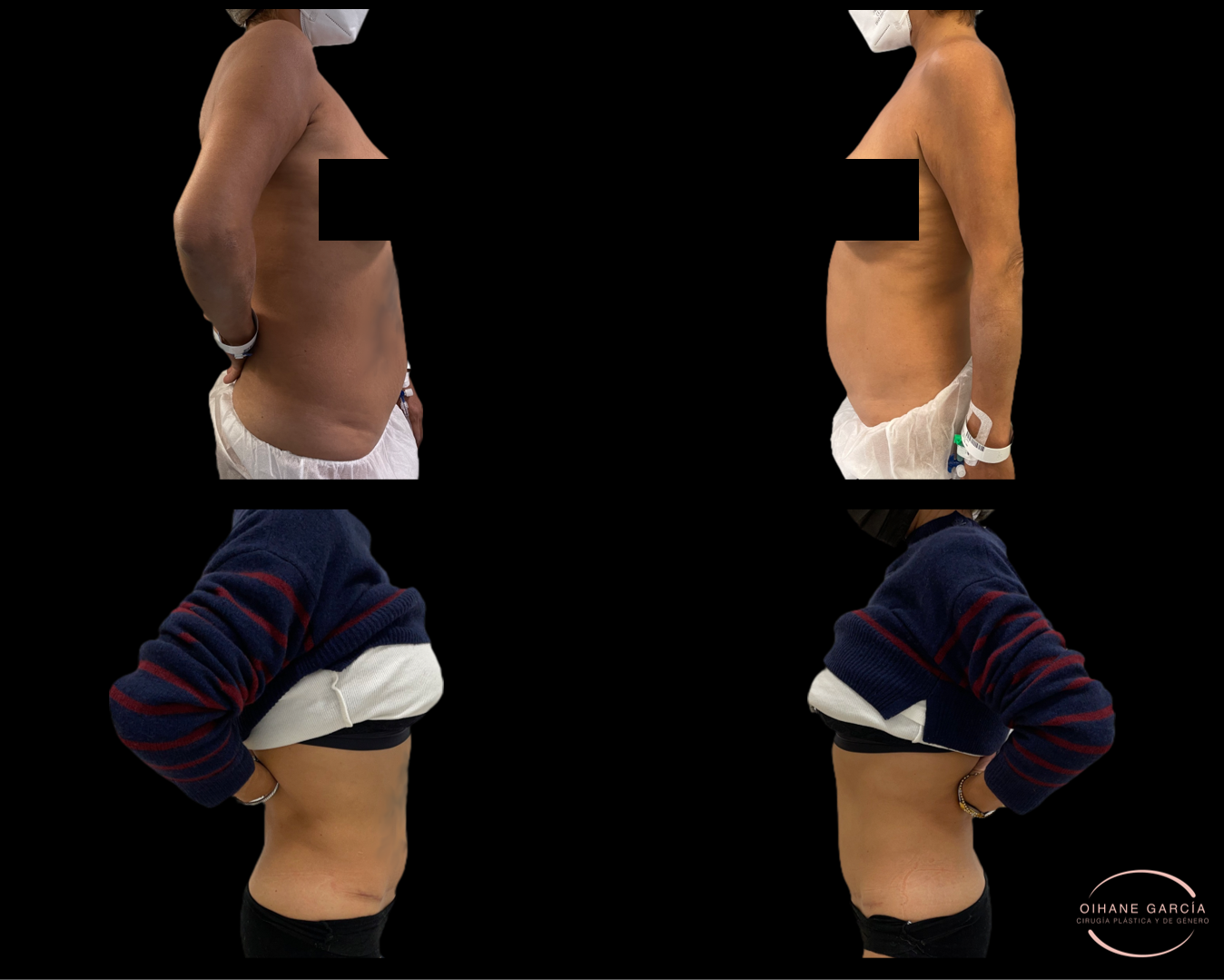
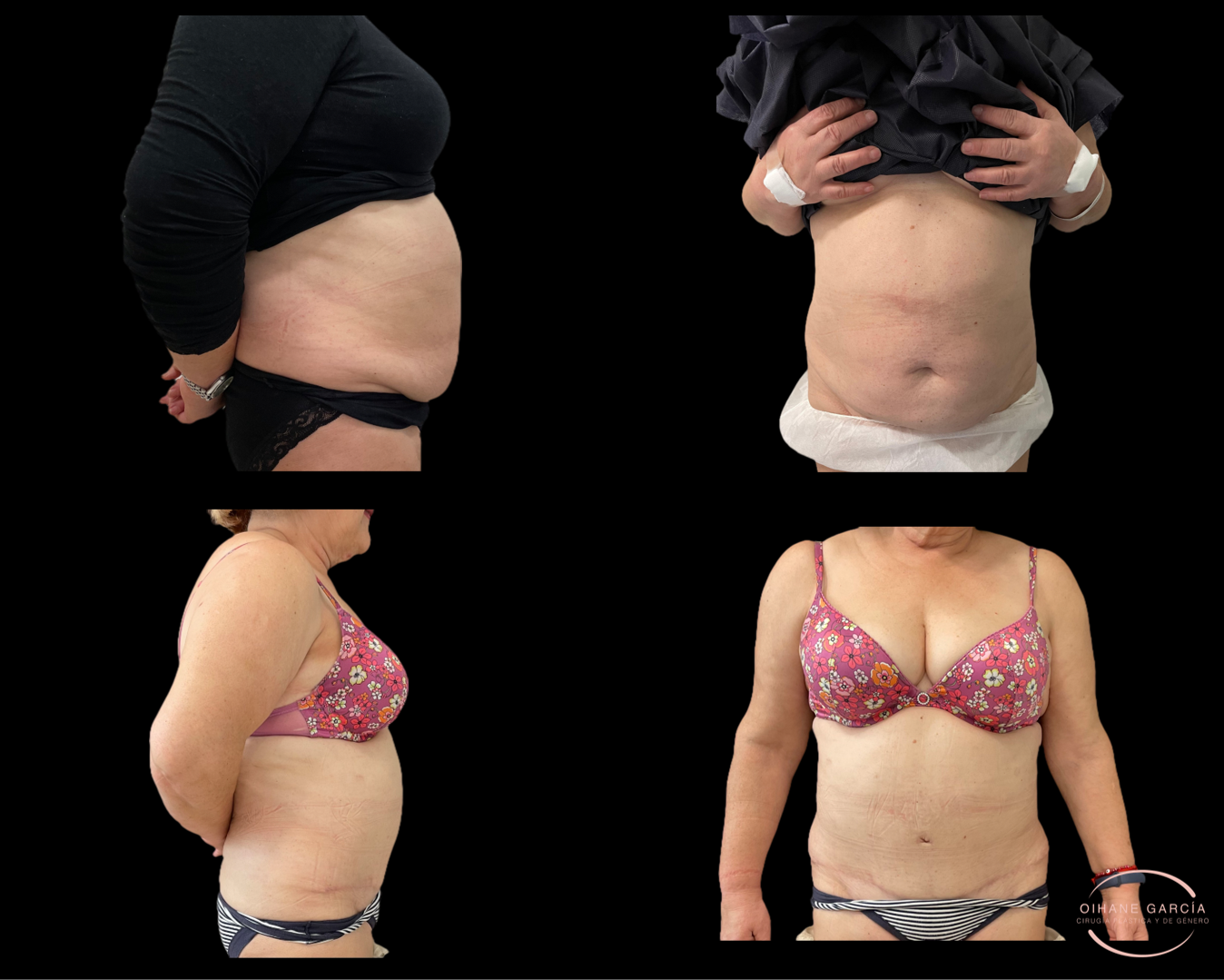
Abdominoplasty is a surgical procedure designed to correct excess skin and abdominal laxity, as well as separation of the rectus abdominal muscles, known as diastasis recti, when present. It is not a weight-loss procedure, but rather a way of improving body contour when the skin and abdominal wall have lost their ability to retract, something that commonly occurs after pregnancy, significant weight changes, or simply with the passage of time.
Over the years, or following repeated stretching, the skin can become loose and the muscles can separate along the midline. This does not only affect appearance; in some cases, it can also lead to weakness of the abdominal wall, a feeling of abdominal protrusion, and even lower back discomfort. Abdominoplasty allows excess skin and fat below the navel to be removed and, where diastasis is present, the muscles to be repaired by bringing the rectus muscles back together, restoring firmness and support to the abdominal wall.
Types of abdominoplasty
When we talk about abdominoplasty, there is no single technique that is suitable for every patient. The type of procedure depends on the degree of skin laxity, whether or not diastasis is present, the amount and distribution of fat, and any previous scars.
Mini abdominoplasty
This is indicated when excess skin is limited to the area below the navel. The scar is shorter and, in general, it is not necessary to reposition the navel. Limited muscle repair may be performed if the diastasis is mild and confined to the lower abdomen. It is an option for patients with moderate laxity and good skin tone in the upper abdomen.
Standard abdominoplasty
This is indicated when there is excess skin both above and below the navel and when there is diastasis of the rectus abdominal muscles. In this case, a low abdominal incision is made, the skin is lifted up towards the ribcage, the muscles are repaired if they are separated, and the navel is repositioned in its new anatomical position. This is the technique that provides comprehensive correction of the abdomen. The incision is made across the lower abdomen, generally from hip to hip, in a position that can be concealed by underwear or swimwear.
Fleur-de-lis abdominoplasty
This is a variation indicated for patients with significant excess skin in both the vertical and horizontal directions, something frequently seen after major weight loss. In addition to the usual lower abdominal scar, a vertical scar is added along the midline of the abdomen. This allows excess skin to be removed across the width of the abdomen as well, helping to achieve greater waist definition. It is a more extensive procedure and involves an additional visible scar, but it provides more comprehensive correction when the degree of laxity cannot be adequately treated with a standard abdominoplasty.
Abdominoplasty with liposuction
Sometimes referred to as lipoabdominoplasty, this combines skin removal and muscle repair with liposuction of the flanks, upper abdomen or waist. It is important to understand that these procedures have different but complementary functions. Abdominoplasty addresses skin laxity and abdominal wall laxity, while liposuction contours the body and removes localised fat deposits, particularly around the flanks or upper abdomen. When appropriately combined, they can achieve a more harmonious and natural body contour, avoiding a result that is "flat but wide". Liposuction does not replace abdominoplasty when there is significant excess skin, nor does abdominoplasty replace liposuction when the main concern is localised fat. Nowadays, in experienced hands, the combination is common and safe when appropriately indicated.
Extended abdominoplasty
In more extensive cases, such as following massive weight loss, an extended abdominoplasty may be necessary. In this procedure, the scar is extended towards the flanks to address excess skin at the sides of the body. In even more complex situations, where excess skin is circumferential, a circumferential lipectomy or lower body lift may be considered. This addresses the abdomen, flanks and lower back during the same procedure.
Final considerations
The choice of technique depends not only on the patient's wishes, but also on a detailed anatomical assessment. My role as a surgeon is to assess what your abdomen really needs and offer the option that provides the best balance between results, safety and scarring.
This is a procedure that requires careful patient selection and thorough planning. The ideal patient is someone who has reached a stable weight, is not planning to become pregnant again in the near future, and understands that a permanent scar will remain, although it is strategically positioned.
Post-operative recovery
The post-operative period involves wearing a compression garment, limiting strenuous activity for several weeks and understanding that swelling may persist for several months. Recovery is gradual. The aim is not only to achieve a flatter abdomen, but also a firmer abdominal wall and a more balanced body contour.
Timeline
Step-by-step explanation of the process
Additional information
Detailed information about the procedure
Further information
We have prepared some documents containing detailed information.
This is general information and should be tailored to each individual patient. This personalised assessment, together with a detailed explanation of the procedure and the opportunity to address any questions or concerns, takes place during consultations with Dr. García.